


Salesforce put hard numbers on a shift most sales teams already feel. In its 2026 State of Sales report, 54% of sellers say they already use AI sales agents, and 87% of organizations use AI in some form for tasks like prospecting, forecasting, and drafting emails.
Reps expect agents to cut prospect research time by 34% and email drafting by 36% once fully deployed.
This is current behavior, not a forecast, drawn from more than 4,000 sales professionals surveyed worldwide. The work that once filled an SDR’s morning, list building, account research, and first-draft sequences, is moving to software faster than most teams planned for.
The harder question is what that leaves for the people doing the job, and how to build a team around it.
What the 2026 sales data shows
Salesforce’s 7th State of Sales report found that AI agents have moved from experiment to standard tooling.
54% of reps have used an agent, and nearly nine in ten expect to by 2027.
Adoption tracks with results: top performers are 1.7 times more likely than underperformers to use AI agents for prospecting.
The time savings explain the pull. Once fully deployed, agents are expected to reduce research time per prospect by 34% and email drafting by 36%.
For a team carrying a quota, that is, hours returned each week to selling rather than to preparing to sell.
What Anthropic’s labor research means for sales
Adoption is one signal. Employment is another. Anthropic’s March 2026 study, Labor Market Impacts of AI, measured how much real work people already hand to AI rather than what AI could theoretically do. The Bureau of Labor Statistics projects occupations with higher observed exposure to grow more slowly through 2034.
The exposed roles are not entry-level. Anthropic found that the most exposed workers tend to be more educated and higher-paid, which puts experienced sellers in scope alongside junior reps.
The study reported no systematic rise in unemployment in exposed roles so far, but it did find early evidence that hiring of younger workers in those occupations has begun to slow.
Sales and related knowledge work sit toward the more exposed end of that range, which makes the trend worth planning around now.
The part agents still can’t run
Agents are strong at volume work: pulling account data, building sequences, and producing first drafts at a scale no individual can match.
They are weaker where the outcome depends on reading a situation and timing a response.
A late-stage objection or a stalled deal that needs a new stakeholder still requires a person who can interpret context and adjust in the moment.
This is why the rep role is concentrating on higher-value work. The operator who directs agents across research, qualification, and drafting, then spends the reclaimed hours on revenue conversations, is the model the data points toward.
How to build an outbound stack for this shift
Start by sorting tasks by the kind of work they require.
- Hand high-volume, low-judgment work to agents: account research, list building, and first-draft sequences.
- Keep judgment-heavy work with reps: discovery, objection handling, negotiation, and account strategy.
- Add a review step so a person checks the agent output before it reaches a prospect, which protects the sender’s reputation and message quality.
- Track the hours agents give back and redirect them to pipeline conversations.
The teams getting value share one habit: they are explicit about which layer belongs to the agent and which belongs to the rep.
Where AnyBiz fits
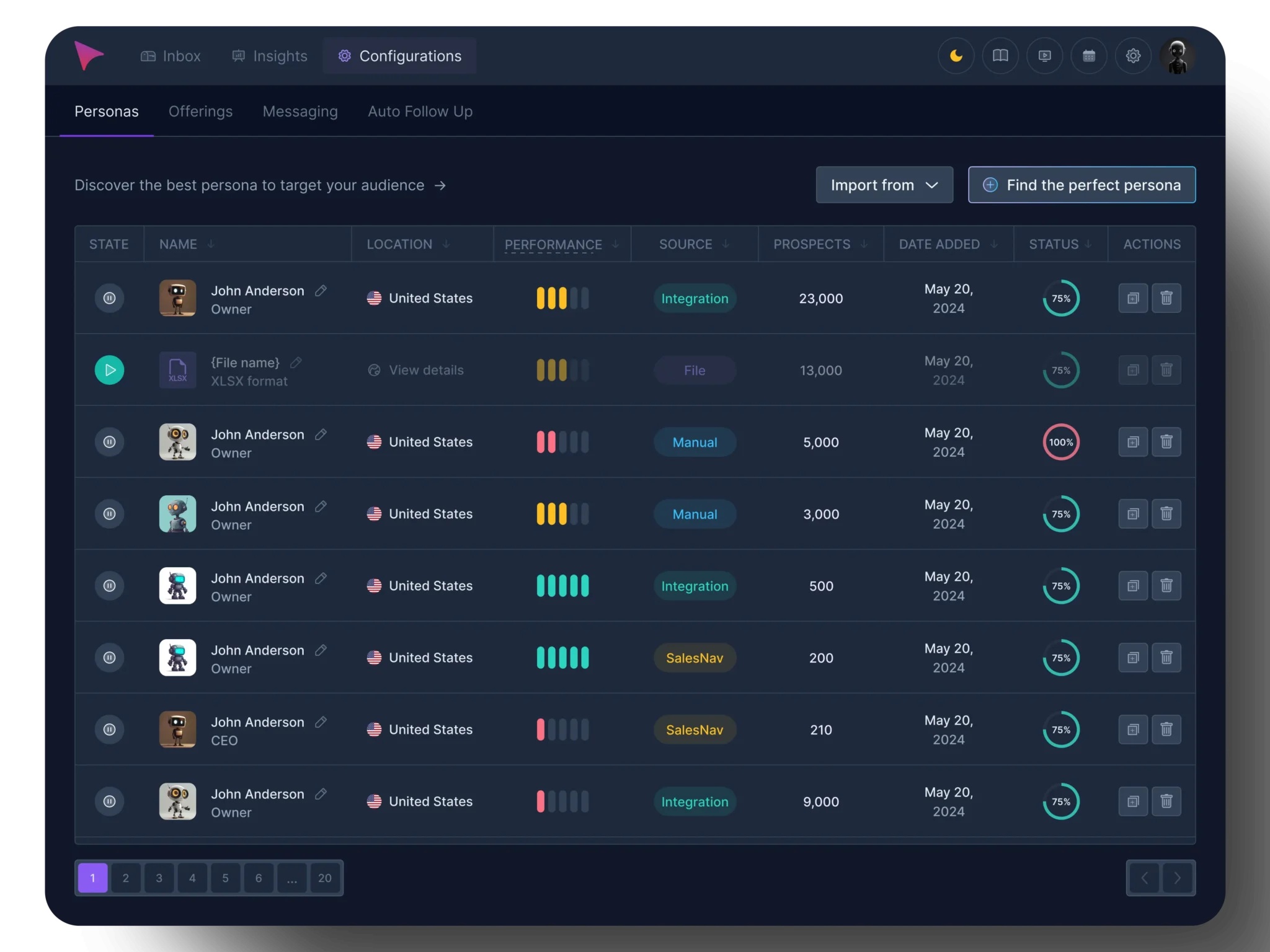
AnyBiz is built for this split. Its AI agents handle the research, qualification, and first-draft layer continuously, while your reps keep control of the conversations that close.
See how AnyBiz puts agents on the busywork so your reps own the relationships. Book a demo.