


Outbound lead generation means starting the conversation. Instead of waiting for buyers to discover you through search or content, you identify the companies and people who fit your product and reach out to them first through email, phone, LinkedIn, and other channels.
The approach still works, but the conditions have changed. Cold email reply rates have fallen for several years in a row, the major inbox providers tightened their sending requirements, and most decision-makers now receive far more outreach than they can read.
The teams that win in 2026 send fewer and sharper messages to better targets, and they protect the technical setup that gets those messages delivered at all.
This guide explains what outbound is, how it compares to inbound, why it got harder, and how to run each major channel well. It uses current benchmarks so you can measure your own program against the market instead of guessing.
What outbound lead generation actually is
Outbound puts you in control of timing and targeting. You build a list of accounts that match your ideal customer profile (ICP), research the people who make or influence the buying decision, and contact them with a specific, relevant reason to talk. The first move is yours.
That control is the main reason outbound earns a place alongside inbound.
You decide which segments to pursue this quarter, you get fast feedback on whether a message and a target list are working, and you are not dependent on how much organic traffic happens to arrive.
The trade-off is effort and discipline. Good outbound requires real research, tight copy, and careful attention to sender reputation, because a sloppy program can damage the domains you send from.
Outbound vs. inbound at a glance
Outbound | Inbound | |
|---|---|---|
Who starts | You contact the prospect | The prospect finds you |
Speed to feedback | Fast, within days | Slower, builds over months |
Targeting control | High, you pick the accounts | Lower, demand finds you |
Main cost | Research, copy, sending setup | Content and SEO over time |
Best for | Defined ICP, named accounts | Broad demand, self-serve |
Most strong pipelines use both. Inbound captures the demand that already exists, and outbound creates demand inside the specific accounts you want to win. The rest of this guide focuses on the outbound side.
Why outbound got harder, and what that means for you
Two shifts reshaped outbound over the past two years, and ignoring them is the fastest way to waste a campaign.
First, reply rates declined. Large benchmark studies put the average cold email reply rate near 3.43% in 2026, down from roughly 5% in 2025 and about 8.5% in 2019. Put plainly, around 19 of every 20 cold emails now go unanswered.
The decline tracks inbox saturation, smarter spam filters, and a flood of low-effort, AI-generated outreach that made buyers more skeptical.
Second, the inbox providers raised the bar. Starting in February 2024, Google and Yahoo began enforcing requirements on senders that push more than 5,000 messages a day to their users: authenticate with SPF, DKIM, and DMARC, offer one-click unsubscribe, and keep the spam complaint rate below 0.3%.
Microsoft introduced similar rules for Outlook and Hotmail in 2025, and Google moved from temporary delays toward outright rejection of non-compliant mail later that year.
Even senders below the bulk threshold feel the effect, because the same signals now shape inbox placement for everyone.
Cold email: fix deliverability first, then copy
Cold email is still the workhorse of outbound, but the order of operations matters. The best copy in the world cannot help a message that lands in spam, so deliverability comes first.
The deliverability foundation
- Authenticate. Authenticate every sending domain with SPF, DKIM, and DMARC, and make sure DMARC alignment passes. This is now table stakes, not a nice-to-have.
- Warm up. Warm new domains and mailboxes gradually for about four weeks before scaling. Domains rushed into volume in a week or two often need months to recover.
- Cap volume. Keep each mailbox to roughly 30 to 40 sends per day. An agent can draft thousands of emails, but a mailbox can only send so many before its reputation slips.
- Protect your rate. Keep your spam complaint rate well under 0.3%, and verify lists to keep bounces under 2%. A single percent of complaints can sink an otherwise healthy program.
- Make exit easy. Add one-click unsubscribe and honor it quickly. Most modern sending platforms include the required header, but confirm yours does.
Writing emails people answer
Once delivery is solid, the copy does the work. The patterns that correlate with higher reply rates are well documented:
- Length. Keep it short. Messages in the 50 to 125 word range tend to perform best, and plain text usually beats heavily designed HTML.
- Relevance. Personalize beyond the first name. References to a prospect’s role, company, or a recent trigger event consistently lift reply rates over generic merge tags.
- Structure. Lead with a reason that matters to them, state one clear value point, and ask for one specific next step such as a short call on a named day.
- Persistence. Follow up. Sequenced follow-ups generate a large share of total replies, yet many reps stop after the first message and leave most of their responses on the table. Three to five touches spaced a few days apart is a reasonable cadence.
One note on measurement: open rate is no longer a reliable metric. Apple Mail Privacy Protection auto-loads tracking pixels, which inflates reported opens. Track reply rate, meetings booked, and pipeline instead.
Cold calling: still useful, especially as a second touch
Connect rates on cold calls are low and getting lower, but the channel keeps a place in outbound for one reason: a real conversation moves a deal faster than any email thread.
Calling works best when it is paired with email and LinkedIn rather than run on its own.
- Do the homework. Research before you dial so you can open with a reason that fits the specific company, not a script anyone could read.
- Open strong. Earn the next thirty seconds in the first ten. State who you are and why this call could be worth their time, then stop talking.
- Listen. Ask open questions and listen more than you pitch. The goal of a first call is to learn whether there is a fit, not to close.
- Handle pushback. Treat objections as information. Acknowledge the concern, then connect it back to a relevant outcome you can help with.
- Set the next step. Close every call with a concrete next step, whether that is a meeting, a follow-up message, or a clear no.
LinkedIn and social selling
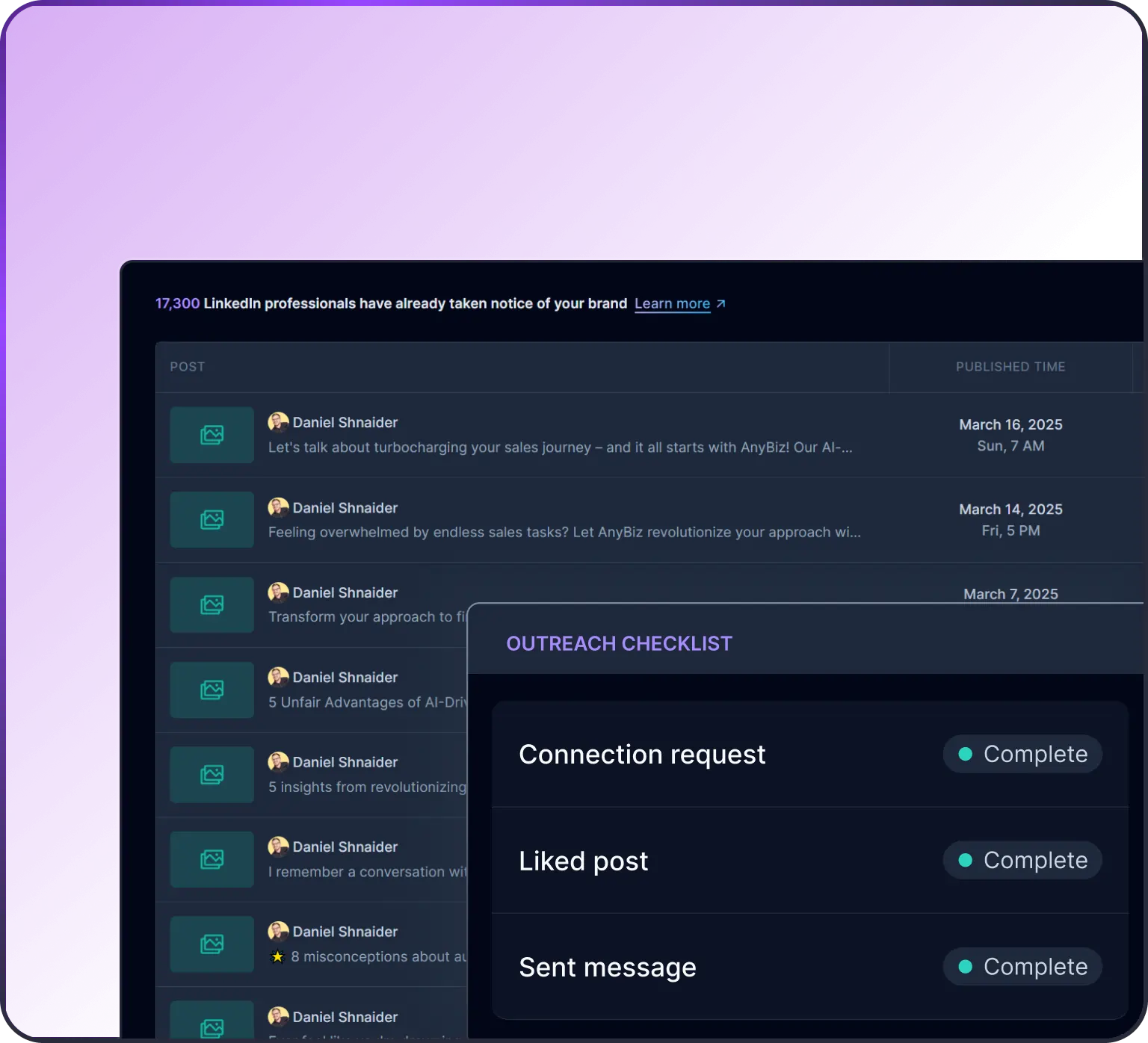
LinkedIn is the most precise outbound channel for B2B, because you can target by role, company, industry, and seniority, then reach decision-makers directly. It rewards a slower, relationship-first approach far more than email does.
The connection acceptance rate on cold LinkedIn outreach sits around a quarter of requests, but replies after a connection is made run much higher than cold email, often in the low double digits. That makes LinkedIn a strong place to start a relationship and a poor place to pitch on the first message.
- Set the stage. Build a profile that reads like a resource, not a billboard. Decision-makers check who is reaching out before they reply.
- Warm the contact. Engage before you ask. Comment on a prospect’s post or reference their work in your first note so the outreach feels earned.
- Stay present. Share useful content consistently so you stay visible to the network you are building, which keeps later conversations easier to restart.
- Qualify and move. Use the platform’s search and sales tools to keep your list tight, then move promising threads to a call when the timing is right.
Multichannel sequencing: where the lift comes from
Single channel outreach leaves results on the table. Coordinated sequences that combine email, LinkedIn, and phone consistently outperform email-only programs at the same volume, with reported lifts ranging from roughly a third higher to several times higher depending on the study and segment.
The principle is simple. Different people respond on different channels, and a prospect who ignores an email may answer a LinkedIn note or pick up a call. Keep a consistent core message across channels while adapting the format to each one, and let each touch reference the last so the sequence feels like one conversation rather than three disconnected pitches.
Referrals: the highest trust source you have
A referral arrives with trust already attached, which is why referred leads tend to convert at higher rates than cold ones. The work is making it easy and worthwhile for happy customers, partners, and employees to send people your way.
- Reward both parties. Offer an incentive that fits your product and rewards both sides of the referral.
- Make it effortless. Remove friction. The fewer steps between wanting to refer and actually doing it, the more referrals you get.
- Time the ask. Remind people the program exists at the moments they are happiest, such as right after a win or a positive support interaction.
- Close the loop. Thank and recognize referrers so they keep advocating.
Dropbox is the textbook example, and it is worth getting the story right because it is often misremembered. Dropbox did not grow on cold email.
It built a double-sided referral program inside the product: both the existing user and the friend they invited received 500 MB of free storage.
That single mechanic helped take the company from about 100,000 users to roughly 4 million in 15 months, with referral signups reaching a large share of daily growth, all without traditional advertising spend.
Account mapping for complex deals
In B2B sales with several decision makers, account mapping is how you avoid pitching one person while the real buyer sits two seats away.
You build a picture of the target organization, identify the people who influence the decision, and tailor your engagement to each of them.
- Pick the accounts. Select high-value target accounts that fit your ICP and stand to benefit clearly from your solution.
- Research the structure. Use LinkedIn, company sites, and industry sources to map the org structure and the people in the buying group.
- Understand the players. Identify each stakeholder’s role, their priorities, and the pains your product addresses for them specifically.
- Plan the approach. Map who influences whom, then build an engagement plan that reaches each stakeholder with a message that fits their concerns.
- Execute together. Coordinate sales and marketing so the account hears a consistent story from every touch.
Two amplifiers worth a mention
Pay per click and content syndication sit at the edge of outbound. Neither involves contacting a named prospect directly, but both extend reach in ways that support an outbound motion, so they earn a short note here.
- Pay per click. Useful for putting your offer in front of buyers already searching for a solution. Tie ads to intent driven keywords, send clicks to a focused landing page that matches the ad, and test copy and targeting continuously. Treat it as demand capture that complements outbound rather than replaces it.
- Content syndication. Republishing your content on relevant third-party sites can extend reach and build authority. To protect your search ranking, point a canonical tag back to the original on your own site so search engines know where the content lives. Choose partners whose audience genuinely overlaps with yours.
Automating outbound with AI
Outbound has always rewarded consistency, and consistency is exactly what software does well. The shift in 2026 is that automation moved from assistive to agentic.
The first wave of sales AI drafted an email or scored a lead on request. The current wave runs multi-step workflows on its own: finding prospects, reaching out, handling replies, and booking meetings.
The reason matters more than the novelty. Research from Salesforce found that reps spend only about 28 to 30% of their week actually selling, with the rest going to research, data entry, and admin.
More than half of sellers say they have already used AI agents, and Gartner expects the large majority of seller research to start with AI within a few years. HubSpot’s data shows most AI users save one to five hours a week.
The work that scales with raw effort is the work worth automating, which frees people for the parts that still require a human: trust, nuance, and complex negotiation.
A practical setup uses a CRM to segment leads, score them, and trigger timely, personalized follow-ups, then layers an AI agent on top to run the repetitive top-of-funnel motion.
Where AnyBiz fits

AnyBiz is an AI sales agent built to run B2B outbound from end to end, which makes it a fit for teams that want pipeline without adding headcount.
Rather than automating one task, it manages the full top-of-funnel motion across channels.
- Finds the prospects. It works from a prospect database of more than 450 million contacts, so list building and enrichment happen inside the platform.
- Protects deliverability. Email infrastructure is included. Domains, mailboxes, authentication, and warm-up are handled through Warmy.io, with ongoing deliverability monitoring so campaigns scale without burning sender reputation.
- Books meetings. It books qualified meetings into your calendar, detects website visitors for follow-up, and connects to CRMs such as HubSpot, while learning and improving as it runs.
FAQ
Does cold email still work in 2026?
Yes, but the bar is higher. Average reply rates have dropped to around 3.43%, so a generic blast will struggle. Programs that authenticate their domains, warm up properly, target a narrow ICP, and personalize beyond the first name still see reply rates of 5% or more, and the best reach double digits. The deliverability setup matters as much as the copy.
What changed with Google and Yahoo email rules?
Beginning in February 2024, Google and Yahoo required senders of more than 5,000 daily messages to authenticate with SPF, DKIM, and DMARC, offer one click unsubscribe, and keep spam complaints below 0.3%. Microsoft added similar requirements for Outlook and Hotmail in 2025. Non compliant mail is now increasingly rejected outright rather than just delayed, so authentication is essential for any serious outbound program.
How do I use LinkedIn for outreach without being spammy?
Lead with relevance, not a pitch. Engage with a prospect’s content or reference their work before you ask for anything, keep your profile useful, and share content that helps the people you want to reach. Connection requests are accepted more often when the person can see a clear, genuine reason you are reaching out.
Does content syndication hurt my SEO?
Not if you handle it correctly. Use a canonical tag on the syndicated copy that points back to the original article on your own site. That tells search engines where the source content lives and avoids duplicate content problems while still extending your reach.
How do I keep multichannel messaging consistent without repeating myself?
Keep one core message and adapt the format to each channel. A detailed point on your site can become a short LinkedIn note and a one line reason for a call. Each touch should reference the last so the sequence reads as one conversation across channels rather than the same pitch sent three times.
Should AI replace my sales reps?
No. The strongest setups give AI the high volume, repetitive work such as research, list building, and first touch outreach, and keep reps on trust building, nuance, and closing. Buyers still report more confidence when a human is involved in the decision, so the goal is to free your team for those moments, not remove them.