

Key Takeaways
- Outbound saturation is real, but fixable. Reply rates aren’t down because outbound stopped working. They’re down because most teams are still using the same low-effort playbook in a completely different market. The channel hasn’t failed. The way it’s being used has.
- Volume on its own doesn’t cut it anymore. It now takes hundreds of leads to land a single opportunity. Scaling outreach without improving quality just burns through your market faster than it builds a pipeline. What works today is volume paired with real signals.
- “Hi {FirstName}” isn’t personalization. That kind of token-based approach used to stand out. Now it’s expected at best and ignored at worst. Real personalization means calling out something specific and relevant to that person. The kind of detail that takes a human real time to find, but an AI can pull together instantly.
- AI in outbound isn’t experimental anymore. Most sales teams are already using it in some form, and adoption keeps growing fast. Teams moving later are simply starting behind.
- The teams getting results aren’t just automating faster sends. They’re using AI to research, understand, and act on real buying signals from each prospect at scale. This is what’s driving reply rates into the 2-3% range while most remain way below 1%.
Outbound sales work. Companies that have mastered it grow faster, build pipelines more predictably, and control their own revenue destiny instead of waiting for inbound leads to trickle in.
The problem? Everyone knows it works, and everyone is doing it. As more B2B companies flood inboxes with cold emails, cold calls, and LinkedIn messages, the math has become brutal: more outreach going out, fewer replies coming back.
The solution is not to give up on outbound. It is to evolve. Right now, that evolution is driven entirely by AI Outbound.
A 25-year arms race: How Outbound got here
To understand where outbound sales are today, it helps to trace their history. Over the past two and a half decades, technology has steadily lowered the barrier to reaching prospects, and every time that happened, more companies piled in, saturation increased, and conversion rates dropped.
AI is the latest chapter in this story, but it is playing out faster and more dramatically than anything that came before.
The 1990s: Yellow pages and the phone
Before the internet changed everything, B2B prospecting was genuinely hard work. Finding a potential customer meant physically searching printed directories, picking up the phone, and dialing one number at a time.
Sales teams faced constant rejection at a deeply personal level, because every “no” came from a real human voice on the other end of a call they had placed themselves on.
The labor investment was enormous: researching a lead, finding their contact information, and making the call could easily take 30 minutes per prospect.
As a result, only the most dedicated or best-funded sales organizations did outbound at scale. The playing field was not very crowded.
The 2000s: “Spray and pray.”
The commercialization of email in the late 1990s, combined with the emergence of B2B contact databases like ZoomInfo (founded in 2000) and the early marketing automation tools that followed, changed everything.
For the first time, one salesperson could send the same message to thousands of prospects in a single afternoon. The strategy became known as “spray and pray”: fire as many emails as possible, and hope something sticks. Subject lines were generic. The body copy was identical for every recipient.
And it worked, for a while, simply because no one else was doing it yet. Inboxes were not yet overflowing. People actually read cold emails.
But as more and more companies discovered the playbook, those days ended quickly.
The 2010s: Personalization at scale (sort of)
The next wave of innovation came with the rise of sales engagement platforms like SalesLoft, Outreach.io, and Apollo, combined with richer contact databases that included titles, company sizes, and industry data.
For the first time, teams could build multi-step sequences and include basic personalization tokens: “Hi {FirstName}, I noticed you’re the {Title} at {Company}…” This was a step forward. Teams could also segment their lists by persona and craft messaging around common pain points (the VP of Sales version, the CTO version, the Founder version).
For a few years, this “relevance at scale” approach generated real results. The same pattern repeated itself: more companies adopted the same tools, used the same templates, and sent the same token-personalized emails.
What once felt personal quickly started feeling like exactly what it was, a mail merge with a first name dropped in.
The 2020s: AI arrives and raises the bar for everyone
We are now in the AI era of outbound, and the shift is more significant than any previous technology wave.
AI has made it cheaper and easier than ever to launch an outbound campaign; you no longer need technical expertise, large SDR teams, or expert copywriters to get started.
The catch? AI has lowered the barrier so dramatically that outbound is now within reach for companies of every size and the teams that learn to use it well are pulling ahead faster than ever.
Yes, more companies are running outbound today than at any point in history, and most of them are using the same AI tools in the same basic ways, which means saturation has increased. But that creates a genuine opportunity for the teams willing to go a step further.
This is the paradox every B2B sales leader needs to sit with. On one hand, you need to reach more people than ever to fill your pipeline: industry estimates suggest it now takes roughly 350 leads to generate a single opportunity.
On the other hand, reaching more people with low-quality, generic messaging accelerates the very problem you are trying to solve. You burn through your total addressable market faster, damage your brand, and get flagged by spam filters in the process.
The only rational response is to do what most teams are not yet doing: combine volume with genuine, signal-driven personalization.
Anyone willing to take that step stands out immediately and dramatically. And that is exactly what AI outbound, done properly, enables.
Why “Hi {FirstName}” is dead
The personalization tactics that worked in 2015 are now actively working against you. Gmail and Yahoo’s 2024 bulk-sender policies introduced AI-driven spam classifiers that evaluate content relevance, not just sender reputation.
Generic mass emails get filtered even when they come from authenticated, warmed-up domains.
And on the human side, decision-makers have been receiving token-personalized emails for over a decade. They recognize the pattern instantly. An email that opens with “Hi Sarah, I noticed you’re the VP of Marketing at X Corp” tells the reader nothing except that the sender ran a list through a mail merge.
The data is unambiguous on this point. Research comparing personalized and non-personalized cold outreach consistently shows that campaigns with deep, context-specific personalization, where the opening line references something verifiable and timely about the prospect or their company, achieve response rates of 2 to 3%, compared to below 1% for generic templates. That is a five-to-one difference in results, which at scale means the difference between a healthy pipeline and a stalled one.
The problem with deep personalization has always been time. Researching a prospect properly takes 20 to 30 minutes per prospect.
A human SDR who spends their day on research might send 10 genuinely personalized emails. That math does not work when you need to contact hundreds of prospects a week. This is precisely the gap that AI was built to close.
What AI Outbound actually does
Modern AI outbound is not simply a faster way to write cold emails. It is a different operating model.
An AI outbound agent like AnyBiz continuously monitors a database of hundreds of millions of verified contacts for buying signals, events that indicate a prospect might be ready to engage.
It then deploys that message across the right channels: email, LinkedIn, and even AI-powered cold calls at the right cadence, follows up intelligently, and triages replies so that a human only steps in when a conversation is genuinely progressing toward a meeting.
The results at this level of personalization are measurable and meaningful. McKinsey’s research on AI in sales found that companies investing seriously in AI-driven sales and marketing see a revenue uplift of 3 to 15% and a sales ROI uplift of 10 to 20%.
Salesforce’s own internal deployment of AI agents tells an even more striking story: in four months, their agents contacted 130,000 previously untouched leads and created 3,200 new opportunities.
The new competitive baseline
Here is the uncomfortable truth about where outbound is headed. Gartner predicts that by 2028, AI agents will outnumber human sellers by 10 to one. The AI SDR market is already valued at over $4 billion and growing at nearly 30% annually.
What that means in practice is that AI-powered outreach (personalized, signal-triggered, multi-channel) is rapidly becoming the expected standard. Just as “Hi {FirstName}” was once innovative and is now table stakes, signal-based AI personalization is moving from competitive advantage to table stakes.
Teams that do not make this transition are not just leaving money on the table. They are actively falling behind.
The case for acting now
Because of the outbound tech proliferation race over the past 25 years, success today requires two things simultaneously: more volume than ever, and better personalization than ever. You cannot achieve both of those goals the way outbound was done in the 2010s.
The manual research required to personalize at scale would consume your entire team. The labor cost alone would eliminate any ROI. AI is the only path that makes both things possible at the same time.
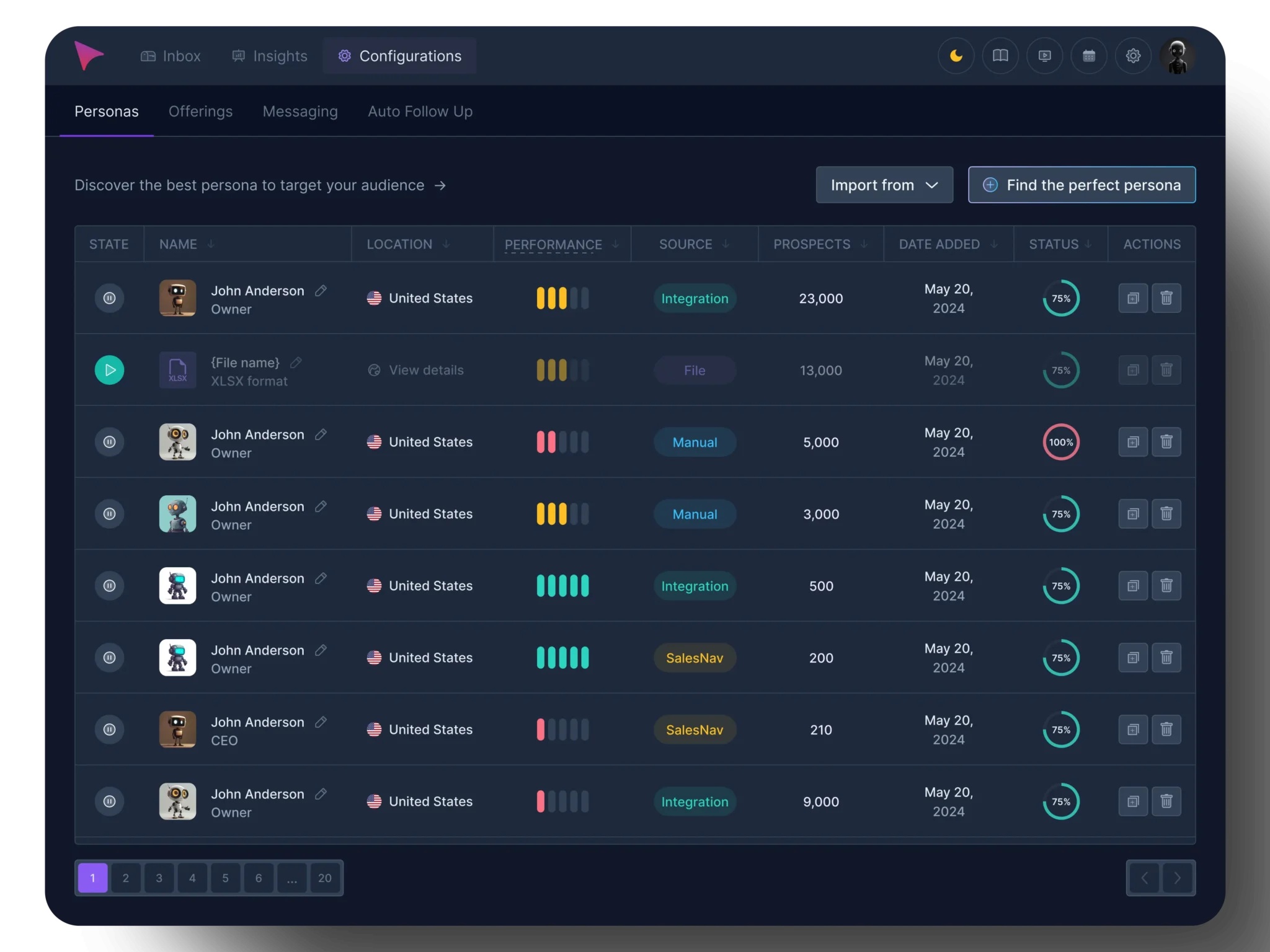
The good news is that getting started does not require a complete overhaul of your sales process. It requires the right tool: AnyBiz is purpose-built for B2B teams that want to run AI outbound without needing technical expertise or a large headcount.
Its AI agents work across email, LinkedIn, and other channels, researching prospects in real time, writing genuinely personalized messages, and booking meetings around the clock, at a scale no human team can match.
If you are serious about building a B2B pipeline in today’s environment, AI outbound is not one option among many. It is the option. Everything else is just a slower, more expensive version of a playbook that is already losing.
Ready to see what AI-powered outbound looks like in practice? Book a demo with AnyBiz and find out how quickly your pipeline can grow when AI is doing the heavy lifting.