


You’ve decided outbound is the channel and that AI should carry the load. Now you face the decision that actually matters: build the whole thing yourself, or use a ready-made, out-of-the-box solution.
The do-it-yourself route looks tempting on paper; just a handful of subscriptions and a weekend of wiring things together. For most people new to outbound, that is exactly where the setup stalls before it sends a single useful email.
So why lean toward a ready-made solution instead of building your own? A working AI outbound solution involves a lot more than a few apps, and the pieces you’d have to stitch together and maintain are the ones that tend to break.
The DIY temptation, and the cost math behind it
Sign up for a few apps, connect them, point a model at your prospect list, and watch meetings appear. The draw is saving money on software and an outbound SDR hire.
Those savings tend to be smaller than they look, and they sometimes vanish once you count your own hours. McKinsey’s research on generative AI in B2B sales points to real efficiency gains in the range of 10 to 15%, but mainly for teams that redesign their workflow around the technology instead of bolting it onto a broken process.
Instead, a ready-made solution hands you that redesigned workflow on day one.
With a DIY build, you pay for it in time rather than dollars.
Everything a DIY stack puts on your plate
A working AI outbound solution requires five separate systems working together, and in a DIY build you own every one of them:
- Prospect data. A reliable source of accurate contact and company records, plus the constant work of keeping that list clean and current as people change roles.
- Outreach delivery. A system that sends, sequences, and times your messages across email and other channels at scale, without you babysitting it.
- Sending infrastructure. The domains, mailboxes, and phone numbers behind everything, set up correctly so they don’t get flagged.
- Deliverability. Warmup, authentication, and spam placement monitoring so your messages actually reach the inbox.
- The AI layer. A language model that writes the outreach, tuned carefully enough that it doesn’t read like every other AI-generated email.
On top of running each system, you have to connect them, usually through APIs, and fix whatever breaks along the way. Salesforce’s State of Sales data shows sellers already juggle around eight tools to close a deal, and 42% feel overwhelmed by how many they have to manage. Those overwhelmed reps are 45% less likely to hit their target.
Deliverability is where most DIY setups quietly die
Even legitimate email struggles to land. Validity’s 2025 Email Deliverability Benchmark put average inbox placement at roughly 84%, which means that about 1 in 6 messages never reached the inbox at all.
On top of that, new domains make it even harder. A fresh sending domain needs 21 to 30 days of gradual warmup before placement settles, and rushing that window can drop you from 85% inbox placement to under 15%.
Since 2024, the major mailbox providers also require proper email authentication on bulk senders, with spam complaints kept under 0.3% and bounces under 2%. Cross those lines and recovery takes weeks.
None of this is optional, and you rarely see the problem coming until your campaign is already sitting in spam. A ready-made platform handles this layer for you and keeps it inside safe limits.
The AI layer is not your strategy
Tuning the model is its own small project: temperature, system prompts, negative prompting, format constraints. Skip that work and your output reads like every other AI-written email in the inbox.
Cold email reply rates have already slipped to about 1.5%, down from 2% a year earlier, with low-effort, AI-generated outreach a big part of why.
It’s tempting to let the model run your strategy and not just write your copy. That rarely ends well, and the wider market is starting to show it. Gartner expects more than 40% of agentic AI projects to be scrapped by the end of 2027, citing unclear value and weak controls. We’ll dig into why the AI layer should not own your strategy in a separate article.
When building your own actually makes sense
Now the honest part, because a ready-made solution is not the right fit for everyone. A custom build is the right move in one specific situation: when your Ideal Customer Profile is behavioral rather than firmographic.
Standard filters like geography, industry, company size, and job title are easy to target with any capable out-of-the-box tool.
Targeting behavior is much harder. If you absolutely have to reach exhibitors from a specific regional tradeshow, or manufacturers that launched a sustainability program in the last twelve months, no packaged solution will capture that cleanly.
That is where specialized data and workflow-automation tools, stitched together by yourself, earn their keep, and where a DIY build is worth the effort. If that describes you, go build it. For everyone else, the math points the other way.
The faster path for most beginners
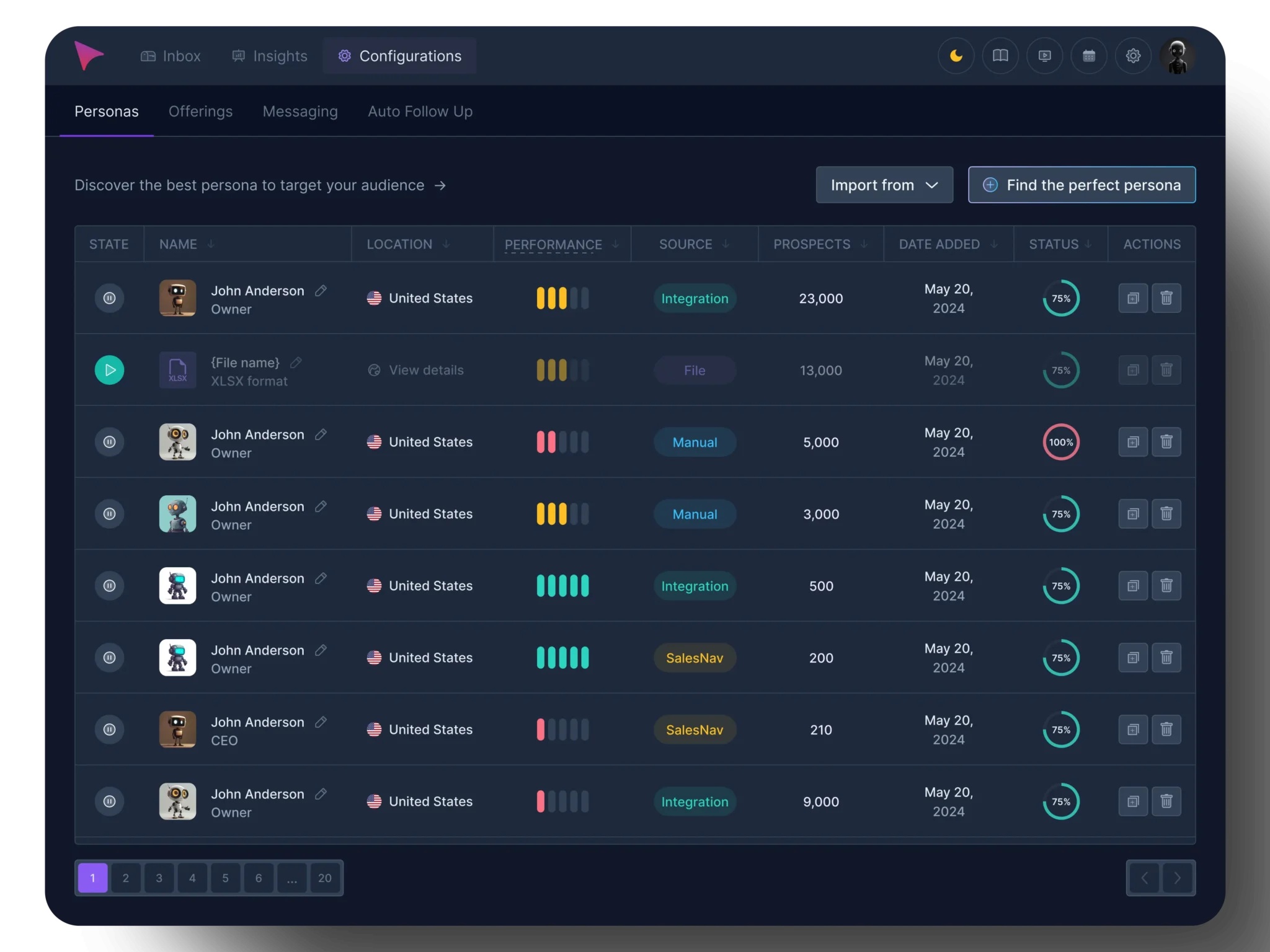
If your ICP fits standard filters, a ready-made platform skips every job above. AnyBiz runs your whole outbound setup as a single AI outbound sales agent, so you can launch a first campaign in about an hour instead of a quarter.
Find out more about AnyBiz, or book a demo with us.